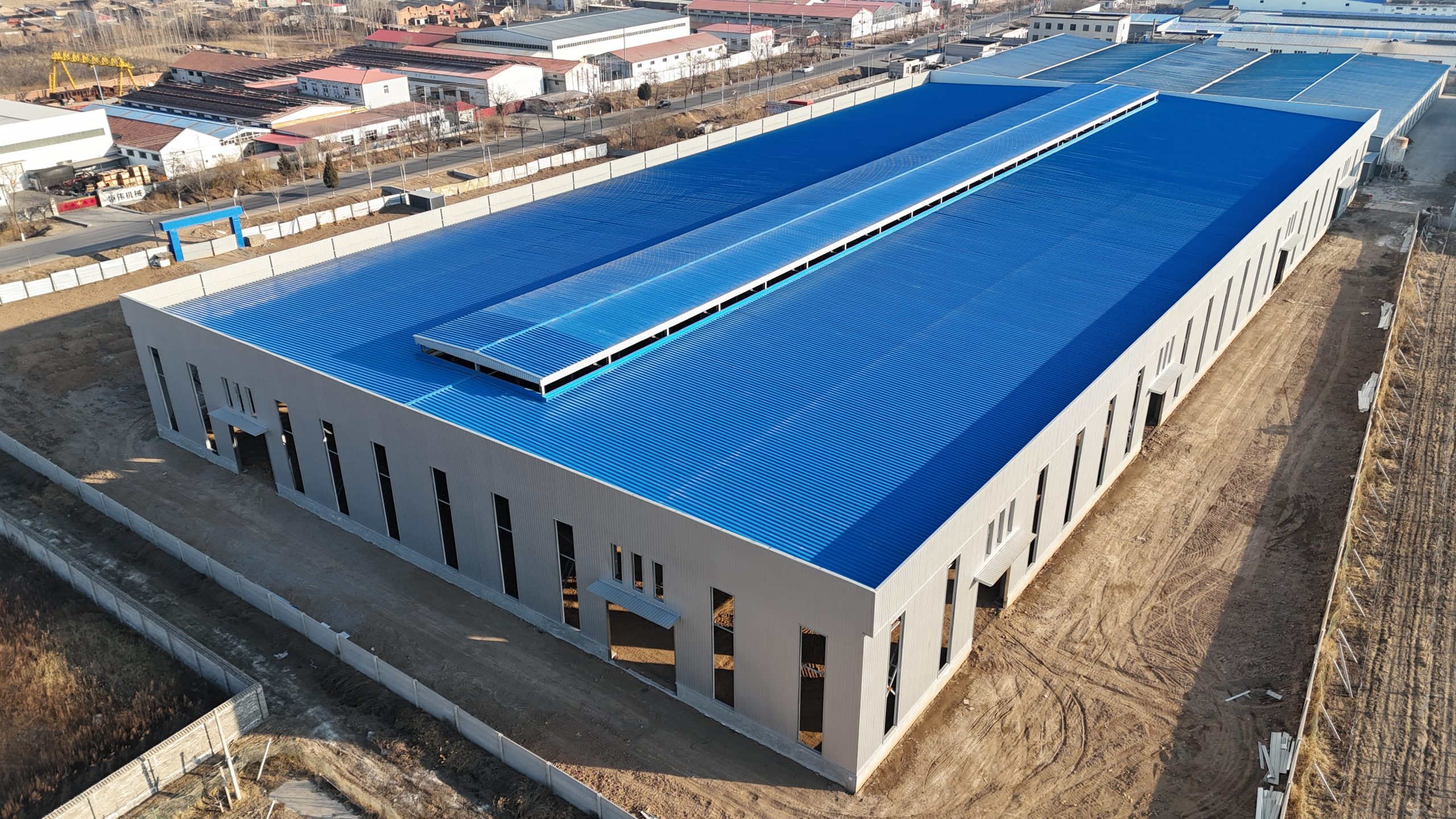
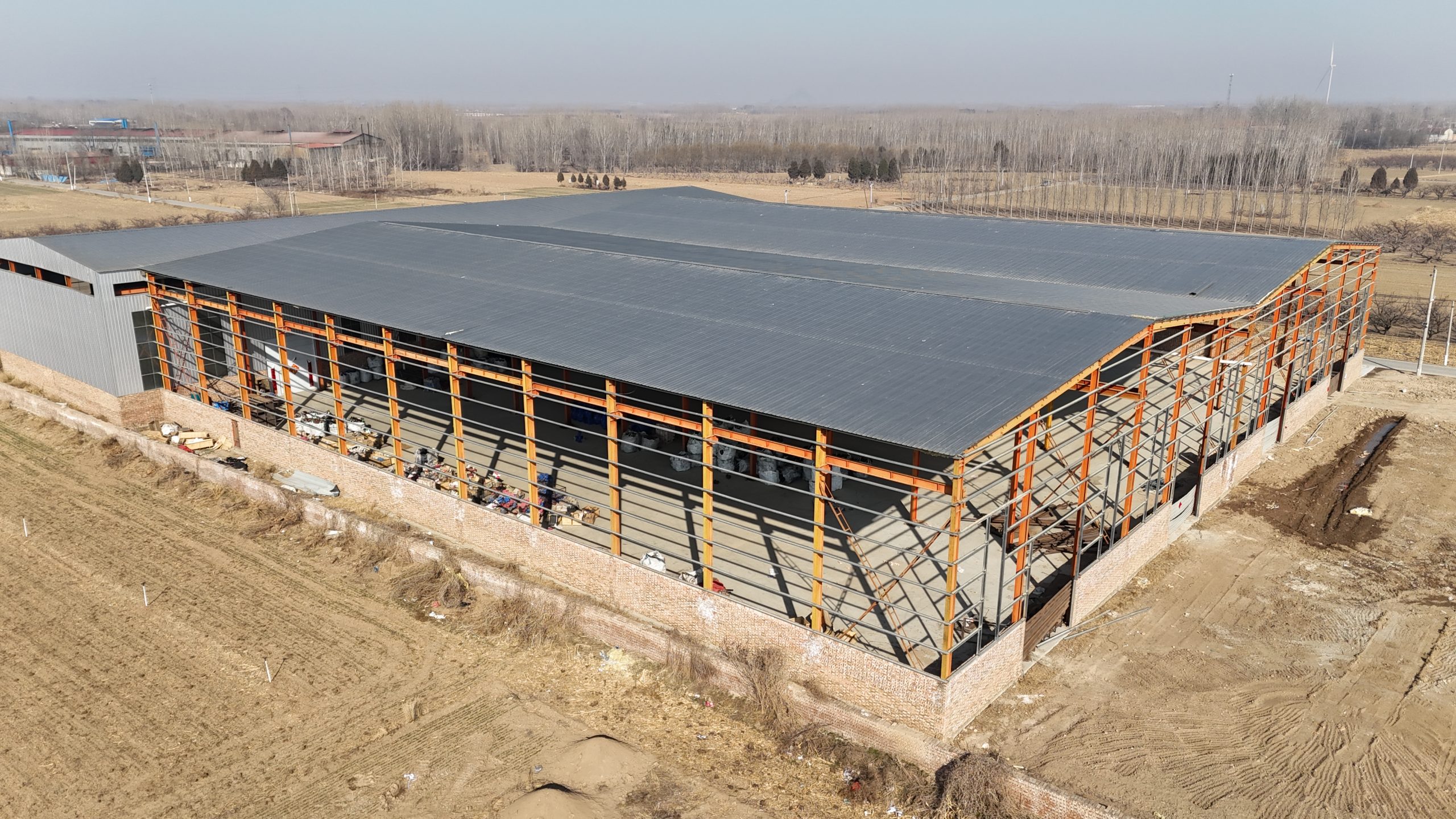
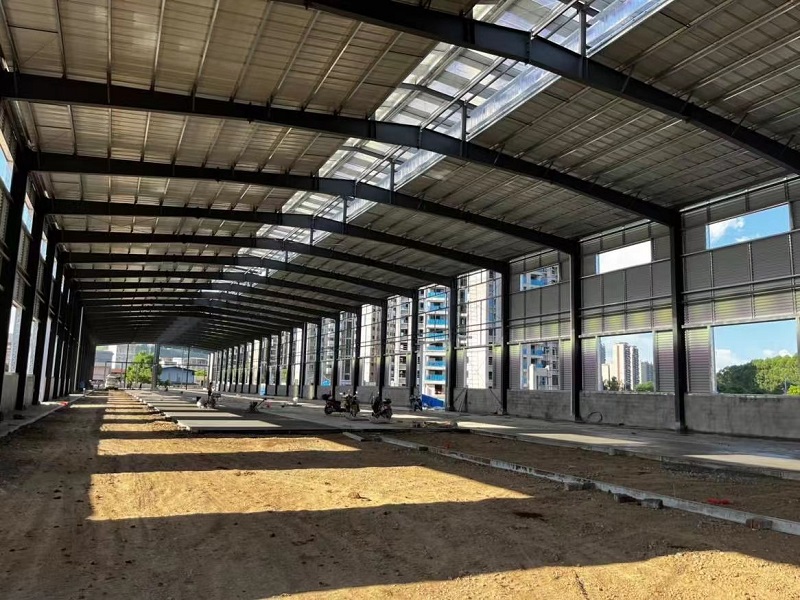
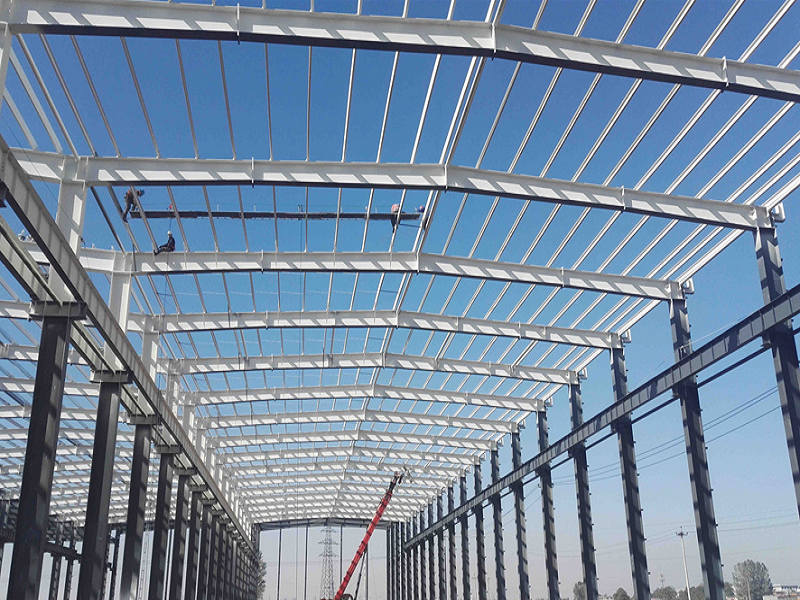
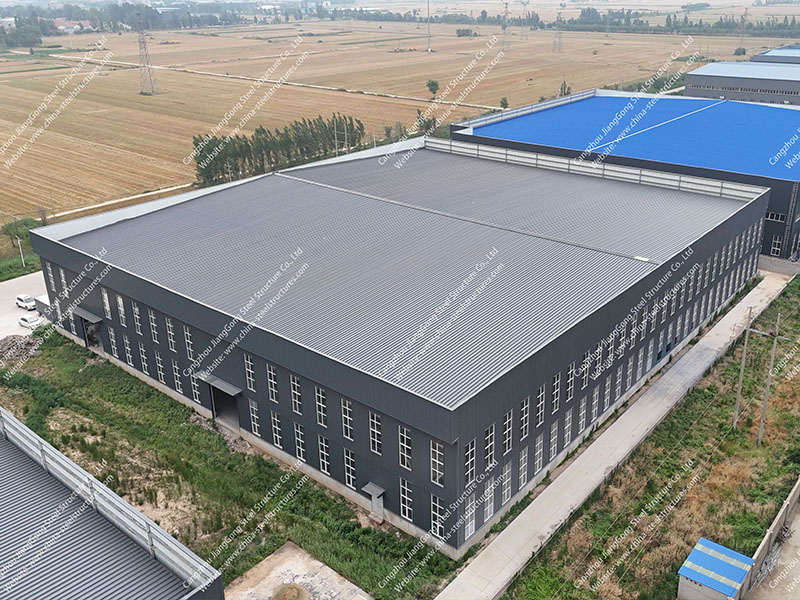
Choosing between a pre-engineered vs conventional steel building is really a choice between two ways of building in steel: a standardized, computer-optimized system versus a structure custom-designed from scratch. For most warehouses, workshops and factories, a pre-engineered building (PEB) is faster, lighter and cheaper; conventional steel earns its place on heavy-industrial, multi-story or unusually complex projects. This guide explains the difference in plain terms and shows which type fits your project. To see typical pre-engineered options, browse our steel warehouse and workshop range, and for the numbers our 2026 steel building price guide is a useful companion.
If you are still deciding on steel at all, our comparison of steel versus concrete buildings covers that question. Here, we assume you have chosen steel and only need to pick the right system. Let’s start with what each one actually is.
What is a pre-engineered steel building?
A pre-engineered building (also called a PEB or pre-engineered metal building) is designed and fabricated to a standardized, optimized system. Software sizes each member to the exact loads it carries, so the main frames use tapered, built-up sections that put steel only where it is needed — deep where forces are high, slim where they are low. Secondary members are cold-formed Z and C purlins, and everything bolts together on site from numbered, pre-drilled parts. The result is a light, efficient, repeatable building that is quick to design, quick to fabricate and quick to erect. PEB is the standard choice for single-story, large-clear-span buildings: warehouses, workshops, factories, showrooms and agricultural buildings.
What is a conventional steel building?
A conventional steel building (traditional or built-up steel) is engineered from scratch for the specific project using standard hot-rolled sections — uniform I-beams and H-columns of constant depth. A structural engineer designs each connection individually, and members are sized to standard catalog profiles rather than tapered to the load, so the same building typically uses more steel than a PEB. In exchange, conventional construction offers maximum flexibility: it can handle very heavy loads, unusual geometries, heavy overhead cranes, and tall multi-story structures that fall outside a standardized system. It takes longer to design and fabricate, and it costs more, but for the right project that flexibility is exactly what’s needed.
Pre-engineered vs conventional steel building at a glance
The table below summarizes how the two compare. The sections after it explain cost, speed, steel weight and flexibility in more detail.
| Factor | Pre-engineered (PEB) | Conventional steel |
|---|---|---|
| Design approach | Standardized, computer-optimized | Custom-designed from scratch |
| Main members | Tapered, built-up sections | Uniform hot-rolled sections |
| Steel weight | Lighter (optimized) | Heavier |
| Cost | Lower | Higher |
| Design + fabrication time | Faster | Slower |
| Large clear span (single-story) | Excellent | Good, but heavier |
| Overhead crane | Light to medium | Any, including very heavy |
| Multi-story / heavy loads | Mostly low-rise | Better suited |
| Complex / unusual shapes | Limited | Highly flexible |
| Future extension | Easy along its length | Possible, more engineering |
Not sure which system your project needs? Tell us your dimensions, use, crane requirement and location and we’ll advise on the right approach and prepare a detailed FOB quote, usually within 24 hours. Contact us for a free quote or message us on WhatsApp.
Cost: pre-engineered vs conventional
Cost is the clearest advantage of a pre-engineered building. Because the system optimizes every member and uses less steel to carry the same loads, the raw material bill is lower — and steel is the largest single cost in any steel building. On top of that, standardized design means far less engineering time, and standardized fabrication runs faster and with less waste in the factory. Erection is quicker too, which lowers labor. Add it up and a PEB is typically the cheaper way to build for standard single-story projects, often by a meaningful margin.
Conventional steel costs more because it uses more material and more engineering hours, and its fabrication is less repetitive. That premium is not waste when the project genuinely needs it — a heavy-industrial building or a complex structure has to be engineered conventionally — but for an ordinary warehouse or workshop, paying for conventional construction usually means paying for capability you won’t use.
Speed: which builds faster?
A pre-engineered building is faster at every stage. Design is quick because the system is already worked out and only needs sizing to your loads. Fabrication is quick because the components are standardized and the factory produces them on an efficient, repeatable line. Erection is quick because parts arrive pre-cut, pre-drilled and numbered, ready to bolt together. Conventional steel takes longer at each of these stages: bespoke engineering, custom fabrication and more complex site work all add time. For a buyer who wants the building up and earning as soon as possible, PEB’s speed is a major practical advantage — and it pairs well with sea freight, since the frame can be fabricated while shipping and site preparation run in parallel.
Steel weight and efficiency
This is the engineering heart of the pre-engineered vs conventional steel building comparison. A PEB’s tapered, built-up members follow the shape of the forces in the frame, so steel is concentrated where bending is greatest and thinned where it isn’t. A conventional frame uses uniform sections sized to the worst-case point along each member, which means carrying extra steel everywhere else. The practical outcome is that a PEB usually weighs noticeably less than a conventional building of the same span and loads. Less steel means lower material cost, lighter foundations and cheaper shipping — a chain of savings that all trace back to the optimized design.
Flexibility: when conventional steel wins
To be fair to conventional construction: there are jobs a standardized system is not the right tool for, and this is where conventional steel is the better — sometimes the only — choice:
- Very heavy overhead cranes. Large-capacity cranes, roughly 20 tons and above, and heavy-duty industrial lifting often call for the heavier, custom-engineered frame of conventional steel.
- Tall or heavily-loaded multi-story buildings. PEB is at its best single-story; complex multi-story structures with heavy floor loads are usually engineered conventionally.
- Unusual geometry. Curved, irregular or architecturally complex shapes that fall outside a standardized system need custom design.
- Extreme or special loads. Heavy industry — steel mills, foundries, some processing plants — with exceptional loads is conventional territory.
If your project is on this list, conventional steel is worth its higher cost. If it isn’t — and most warehouses, workshops and factories are not — a pre-engineered building gives you the same strength for less money and less time.
Which should you choose? By project type
The right answer follows directly from what you’re building:
| Your project | Better choice |
|---|---|
| Warehouse / storage / distribution | Pre-engineered (PEB) |
| Workshop / factory (light–medium crane) | Pre-engineered (PEB) |
| Showroom / commercial hall / sports building | Pre-engineered (PEB) |
| Poultry / livestock / agricultural building | Pre-engineered (PEB) |
| Heavy industry (steel mill, 20t+ crane) | Conventional |
| Multi-story with heavy floor loads | Conventional |
| Complex or unusual geometry | Conventional |
A useful rule of thumb: if your building is a standard single-story structure with a normal roof and a light-to-medium crane, choose a pre-engineered building and enjoy the lower cost and faster build. Reserve conventional steel for the heavy, tall or complex projects that genuinely require it. And remember the two are not mutually exclusive — a good manufacturer can incorporate conventional hot-rolled members into a mostly pre-engineered frame where a specific area needs extra strength, giving you the efficiency of PEB with the capability of conventional exactly where it’s warranted.
Is a pre-engineered building lower quality?
A common worry is that “pre-engineered” means cheaper in the bad sense — lighter, weaker, lower quality. It doesn’t. A PEB is lighter because it is optimized, not because corners are cut: every member is engineered to the same safety codes as conventional steel, sized precisely to the loads it carries. The steel grades, coatings and connections are the same materials used across the industry. What you save is redundant material and engineering hours, not strength or durability. A properly designed and fabricated PEB meets the same wind, snow and seismic requirements as any other steel building for its intended use. The “pre-engineered” label describes an efficient design method, not a lower standard — which is exactly why PEB has become the default for commercial and industrial construction worldwide.
What to check when comparing a PEB quote
Not all pre-engineered quotes are equal, so compare like for like. Confirm the design basis — the wind, snow and seismic loads the frame is engineered for, which must match your site. Ask for the steel tonnage, since it tells you what you are actually paying for. Check the section and coating specification (for example the galvanizing or paint system for corrosion protection), the cladding and insulation, and which accessories — doors, windows, skylights, guttering, crane — are included. Finally, confirm the commercial scope: whether the price is FOB or CIF, and structure-only or with equipment. A serious quotation lists all of this rather than a single per-square-meter number, and two quotes are only comparable when they cover the same design loads, specification and delivery terms.
Why source your pre-engineered building from China
Pre-engineered buildings are especially well suited to factory-direct supply from China. The system is standardized and the fabrication is highly automated, so a high-volume Chinese factory produces optimized PEB frames at a very competitive price per ton — and because a PEB is lighter than a conventional building, it also ships more economically in containers. Buyers combine that low structure cost with local foundation and erection and land a complete building well below a locally-built equivalent. Plan for freight, lead time and customs; for standard PEB projects the structure saving comfortably outweighs them, and the light, flat-packed frame is straightforward to ship worldwide.
Frequently asked questions
What is the main difference between pre-engineered and conventional steel buildings?
A pre-engineered building is designed to a standardized, computer-optimized system using tapered built-up members, so it is lighter, cheaper and faster to build. A conventional steel building is custom-designed from scratch using uniform hot-rolled sections, which is more flexible for heavy or complex projects but uses more steel and costs more.
Is a pre-engineered building cheaper than conventional steel?
Usually, yes. A PEB uses less steel, needs less engineering and fabricates faster, so for standard single-story buildings it is typically the cheaper option — often by a significant margin. Conventional steel costs more but is justified when a project genuinely needs its extra capability.
Is a pre-engineered building as strong as conventional steel?
For the loads it is designed for, yes — a PEB is engineered to the same safety standards. The difference is scope: conventional steel can be designed for very heavy or unusual loads that fall outside a standardized system, such as heavy cranes or complex multi-story structures.
Can a pre-engineered building have an overhead crane?
Yes, PEB frames commonly include light-to-medium overhead cranes, with the columns and crane beams engineered for the capacity. Very heavy cranes, roughly 20 tons and above, often push a project toward conventional steel.
Can a pre-engineered building be multi-story?
PEB is at its best single-story with large clear spans, and low-rise multi-story PEB is possible. Tall or heavily-loaded multi-story buildings, however, are usually better suited to conventional steel design.
Which is faster to build?
A pre-engineered building, at every stage — design, fabrication and erection are all quicker because the system is standardized and components arrive ready to bolt together. This pairs well with international shipping, since fabrication runs in parallel with site preparation.
Can you supply both types?
Our core product is optimized pre-engineered buildings, and we can incorporate conventional hot-rolled members where a project needs extra strength in a specific area. Send us your requirements and we’ll recommend the right approach.
The bottom line
In the pre-engineered vs conventional steel building decision, PEB wins for the great majority of buildings — warehouses, workshops, factories and agricultural structures — because it delivers the same strength with less steel, lower cost and a faster build. Conventional steel remains the right choice for heavy-industrial, tall multi-story or complex projects that need its flexibility. Match the system to the job, and if your building is a standard single-story structure, a pre-engineered building sourced factory-direct is usually the smartest way to build. Tell us your dimensions, use and crane needs and we’ll recommend the right approach and quote it in detail.
steelstructures