Key takeaways
- Cost: Steel is usually ~20–30% cheaper to build; its lighter weight cuts foundation cost by ~30–50%.
- Speed: Steel is ~30–50% faster because the frame is fabricated off-site while the foundation is prepared.
- Space: Steel gives wide clear spans and slimmer columns (roughly 3% of floor area vs 7–9% for concrete), so more usable floor.
- Weight & seismic: Steel is far lighter, which reduces seismic force — an advantage in earthquake-prone regions and soft soils.
- Where concrete wins: fire-critical uses, very high mass/security needs, and some maintenance-sensitive long-life cases.
- The real-world answer: most warehouses are built as a steel frame on a concrete slab — you don’t have to pick just one.
Steel vs concrete at a glance
| Factor | Steel structure | Concrete structure |
|---|---|---|
| Initial build cost | Lower (≈20–30% less) | Higher |
| Foundation cost | Lower — lightweight (≈30–50% less) | Higher — heavy structure needs deeper footings |
| Construction speed | Faster (≈30–50%); prefabricated, bolted on-site | Slower; on-site pouring and curing, sequential |
| Clear span / open space | Excellent — wide column-free spans | Limited — more internal columns |
| Usable floor area | More — slim columns (~3% of area) | Less — bulky columns (~7–9% of area) |
| Self-weight | Light | Heavy |
| Seismic performance | Strong — light weight lowers seismic force; ductile | Heavier mass attracts more seismic force |
| Expandability / modification | Easy — extend, modify, even relocate | Difficult — monolithic and permanent |
| Fire resistance | Needs protective coating/design | Inherently fire-resistant |
| Long-term maintenance | Low with proper coating; manage corrosion | Very low; watch for cracking/spalling |
| Durability / lifespan | 30–50+ years with protection | Very long, high mass |
| Sustainability | Recyclable, less waste, lighter transport | High embodied carbon; less recyclable |
| Best for | Warehouses, factories, logistics, agriculture, large spans | Fire-critical, high-security, heavy-impact, some permanent structures |
1. Construction cost — which is cheaper?
On upfront construction cost, steel generally wins. A steel structure warehouse is commonly 20–30% cheaper to build than an equivalent concrete building. Two things drive that:
- Less material and labor. Steel is pre-engineered and fabricated off-site, so the frame arrives ready to bolt together — fewer man-hours on site than forming, pouring and curing concrete.
- A cheaper foundation. Because a steel building weighs far less than a concrete one, it needs a lighter foundation. Foundation cost is frequently 30–50% lower than for a comparable concrete structure — a saving that is especially large on soft or poor soils, where a heavy concrete building would need deep piling.
There is a fair counter-argument on life-cycle cost: concrete’s very low maintenance and high durability mean that over several decades its total cost can narrow the gap, particularly if a steel building’s corrosion protection is neglected. But for the typical warehouse or factory — where lower upfront cost and a faster return on investment are decisive — steel is the more economical choice, and proper coating keeps its maintenance low anyway. For a full breakdown of what a steel warehouse actually costs, see our companion guide: How Much Does a Steel Structure Warehouse Cost?
2. Construction speed and timeline
This is often the deciding factor, because time is money on any build. Steel construction is commonly 30–50% faster than traditional concrete methods, and the reason is structural, not just effort:
- Fabrication runs in parallel with site work. While your concrete foundation is being prepared on site, your steel frame is already being manufactured in the factory. Concrete can’t do this — each phase (formwork, pour, cure) must finish before the next begins.
- Bolted assembly is quick. Once delivered, steel components are lifted and bolted together, so the superstructure goes up fast and is far less exposed to weather delays or on-site labor shortages.
For high-rise work the contrast is just as stark — steel framing can be roughly 1.5× faster per floor than cast-in-place concrete. A shorter build means lower financing and labor costs and, crucially, you start operating (and earning) sooner.
3. Span, height and usable space
If your operation needs open, flexible floor space — racking, production lines, forklift traffic, overhead cranes — steel has a clear structural advantage. Steel’s high strength-to-weight ratio lets it bridge wide clear spans with no internal columns, giving you an uninterrupted floor. Concrete generally needs more frequent columns to carry the same loads.
There’s a second, often-overlooked space gain: slimmer columns. Steel columns occupy only about 3% of the floor area in a typical building, versus roughly 7–9% for concrete columns. On a large warehouse, that difference is real, rentable, usable floor space — steel simply gives you more building to use for the same footprint.
4. Strength, weight and seismic performance
Steel is strong and, just as importantly, light. That low self-weight is a direct seismic advantage: earthquake forces are proportional to a structure’s mass, so a lighter steel building attracts less seismic force than a heavy concrete one, and steel’s ductility lets it flex and absorb energy rather than crack. For buyers in earthquake-prone regions — much of Latin America, for instance — or on soft soils, this is a meaningful safety and cost benefit, because the structure and its foundation can be lighter for the same seismic demand.
Concrete’s strength is its mass and rigidity, which is an asset for certain heavy-load, high-stability applications — but that same mass is a liability under seismic loading unless carefully designed.
5. Durability, maintenance and lifespan
Both materials last a long time when built well. The nuance is how they last:
- Steel is protected against rust and corrosion with paint systems, galvanizing or coated cladding. With appropriate protection matched to the climate — and especially in coastal or humid environments — a steel structure comfortably reaches 30–50 years or more with only basic maintenance. The one rule: don’t neglect the corrosion protection.
- Concrete is inherently durable and needs very little maintenance, which is a genuine long-term advantage. Its watch-items are cracking, spalling and reinforcement corrosion over decades, but a well-built concrete structure is very low-upkeep.
For a warehouse in a corrosive coastal setting, specify better coatings up front; for a dry inland site, standard protection is plenty. Either way, maintenance for a properly-built steel building is low — the myth that steel is high-maintenance comes from buildings where protection was skipped.
6. Fire resistance and safety
This is concrete’s clearest advantage, and it deserves an honest answer. Concrete is inherently fire-resistant; it doesn’t lose strength quickly in a fire. Steel loses strength at high temperatures and therefore must be protected by design — through intumescent coatings, fireproofing boards, sprinklers and appropriate fire-strategy engineering.
The important point is that this is a solved problem, not a reason to avoid steel. Steel buildings all over the world meet stringent fire codes every day through proper fire protection design. Fire safety is achieved by engineering the whole building correctly — not by picking one frame material — and the cost of fire protection is a normal, budgetable line item, not a dealbreaker.
7. Flexibility and future expansion
Businesses grow and change, and steel is far friendlier to change than concrete. A steel structure can be extended, modified or reconfigured relatively easily — add bays, raise sections, cut in new openings — and in some cases a steel building can even be dismantled and relocated. Concrete is monolithic and essentially permanent: expanding or altering it is difficult, disruptive and expensive. If there’s any chance you’ll need to scale or repurpose the building, steel protects that optionality.
8. Sustainability and environmental impact
Steel is one of the most recycled materials in the world, and steel construction generates less on-site waste than concrete (no formwork waste, no wet trades). Its lighter weight also means lower transport energy and a lighter foundation, reducing material use further. Concrete has high embodied carbon (cement production is carbon-intensive) and is far less recyclable at end of life. For projects with sustainability targets, steel’s recyclability and lower waste are a clear plus.
Steel vs concrete for agricultural and livestock buildings
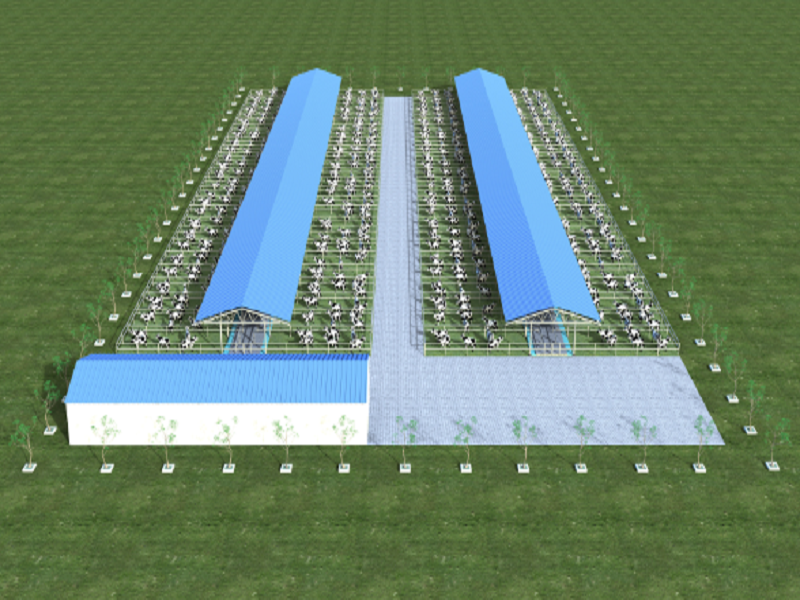
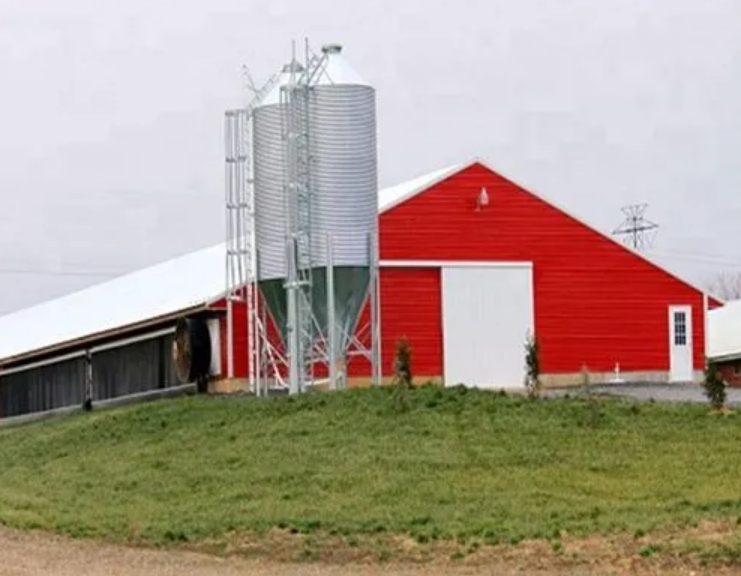
For farm and agricultural structures — poultry sheds, livestock barns, greenhouses and feed storage — steel is almost always the clear winner over concrete. These buildings need wide, column-free interiors for animal movement, equipment and airflow, plus fast, low-cost construction over large footprints, which are exactly steel’s strengths. A light steel frame spans the full width of a poultry house or cattle barn without internal columns, goes up quickly over a big area, and is easy to extend as the operation grows. Steel is also simple to keep clean and to fit with ventilation, feeding and climate-control systems. Concrete’s mass and fire resistance rarely justify its higher cost and slower build for a farm shed. This is why prefabricated steel is the global standard for modern poultry farms and livestock sheds.
When concrete is the better choice
A balanced guide has to say where concrete wins, because sometimes it does:
- Fire-critical facilities where inherent fire resistance is paramount and you’d rather not rely on applied protection.
- Very high mass, impact or security needs — for example structures that must resist heavy impacts or provide blast/security mass.
- Certain permanent, monolithic structures where future flexibility is irrelevant and maximum long-term durability with minimal maintenance is the priority.
- Specific climates or applications where concrete’s thermal mass or moisture behavior suits the use.
For most warehouses, workshops, distribution centers, agricultural and light-industrial buildings, none of these override steel’s cost, speed and span advantages — but they are real considerations for the right project.
The hybrid approach: steel frame on a concrete slab
Here’s what actually gets built more than anything else: a steel portal frame with a concrete ground-floor slab. This is the standard for industrial and logistics buildings in mature markets for good reason — you get steel’s clear spans, speed, height and lower cost for the superstructure, and concrete’s hardness, mass and durability where you need it most: the floor that takes forklift traffic, racking loads and daily wear.
In other words, “steel vs concrete” is often a false choice. The best-value warehouse usually uses both, each where it’s strongest. A good manufacturer will design the steel structure to sit correctly on your concrete foundation and slab, which is exactly the combination we supply.
Which should you choose? A simple decision framework
Ask yourself these questions:
- Do you need open, column-free floor space? → Steel.
- Is fast construction and early operation important? → Steel.
- Is upfront budget a priority, or is the soil soft/seismic? → Steel (lighter foundation, lower seismic force).
- Might you expand or modify the building later? → Steel.
- Is the building fire-critical or does it need extreme mass/security? → Concrete deserves serious consideration.
- Do you want the best of both? → A steel frame on a concrete slab — the usual answer.
For the vast majority of warehouse, factory and agricultural projects, that framework points to steel — which is why steel structures now dominate industrial construction worldwide.
Frequently asked questions
Is steel cheaper than concrete for a warehouse?
Usually, yes. A steel structure warehouse is typically about 20–30% cheaper to build than an equivalent concrete building, and its lighter weight makes the foundation roughly 30–50% cheaper. Concrete can have lower long-term maintenance, but for most warehouses steel wins on total build cost and speed.
Does a steel building rust?
Steel can corrode if unprotected, but this is fully managed with paint systems, galvanizing and coated cladding matched to the local climate. A properly protected steel structure lasts 30–50 years or more with only basic maintenance, even in humid or coastal areas.
Which lasts longer, steel or concrete?
Both last a long time when built well. Concrete has very high inherent durability and low maintenance; steel comfortably reaches 30–50+ years with proper corrosion protection. Lifespan is more about build and maintenance quality than the material alone.
Is steel or concrete better for earthquakes?
Steel generally performs better in earthquakes for most buildings. Because it is much lighter, it attracts less seismic force, and its ductility lets it flex and absorb energy rather than crack. This makes steel a strong choice in earthquake-prone regions such as much of Latin America.
Is steel better than concrete for fire safety?
Concrete is inherently more fire-resistant. Steel needs fire protection — coatings, boards, sprinklers and proper fire-strategy design — but with that protection, steel buildings meet strict fire codes worldwide. Fire safety is achieved through building design, not by frame material alone.
Can I combine steel and concrete?
Yes — and most warehouses do. The standard is a steel frame on a concrete floor slab, which combines steel’s clear spans, speed and lower cost with concrete’s hard, durable floor. It’s usually the best-value approach.
Why do most industrial buildings use steel instead of concrete?
Steel dominates industrial and warehouse construction because it delivers lower build cost, much faster construction, wide column-free spans and easy future expansion — the priorities of most logistics, manufacturing and storage operations. Concrete remains preferred for specific fire-critical, high-mass or high-security structures, but for the typical industrial building steel is the more practical and economical choice.
Does a steel building need less foundation than concrete?
Yes. A steel structure is far lighter than a concrete building, so it needs a lighter, shallower foundation — often 30–50% cheaper. This advantage grows on soft or poor soils, where a heavy concrete building would need expensive deep piling that a steel building can avoid.
Build the right structure for your project
For most warehouses, factories and industrial buildings, a steel structure delivers lower cost, faster construction, wider clear spans and easier future expansion — with a hybrid steel-frame-on-concrete-slab design giving you the best of both materials where it counts.
Cangzhou JiangGong Steel Structure has been designing, fabricating and exporting steel warehouses, workshops, poultry and livestock buildings, and multi-storey frames since 2018, with projects delivered across the United States, Latin America, Africa and Southeast Asia. Tell us about your project and site, and we’ll help you choose the right structure and prepare a tailored, fully-scoped quotation. Contact our team on WhatsApp or send us your requirements here.