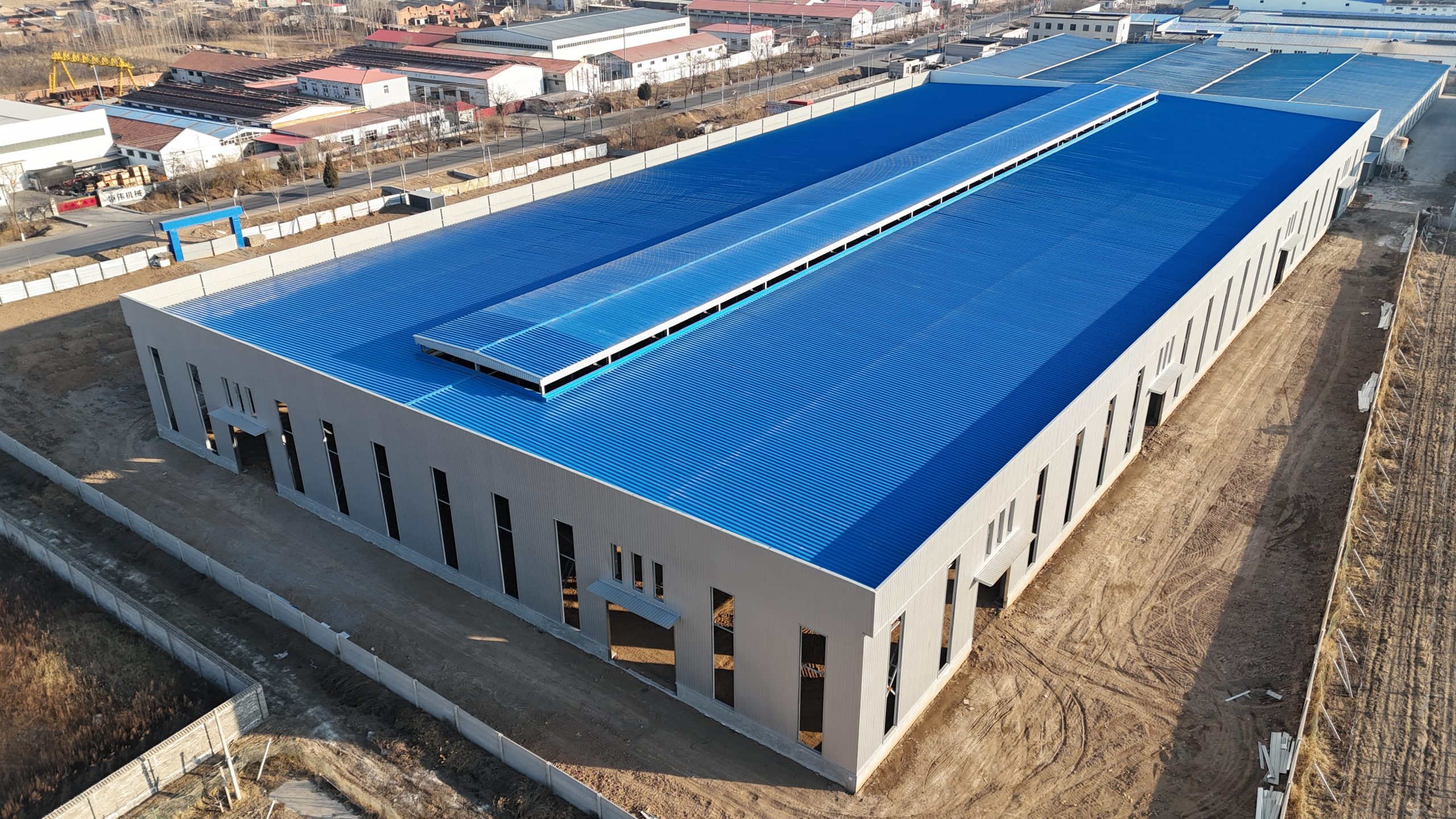
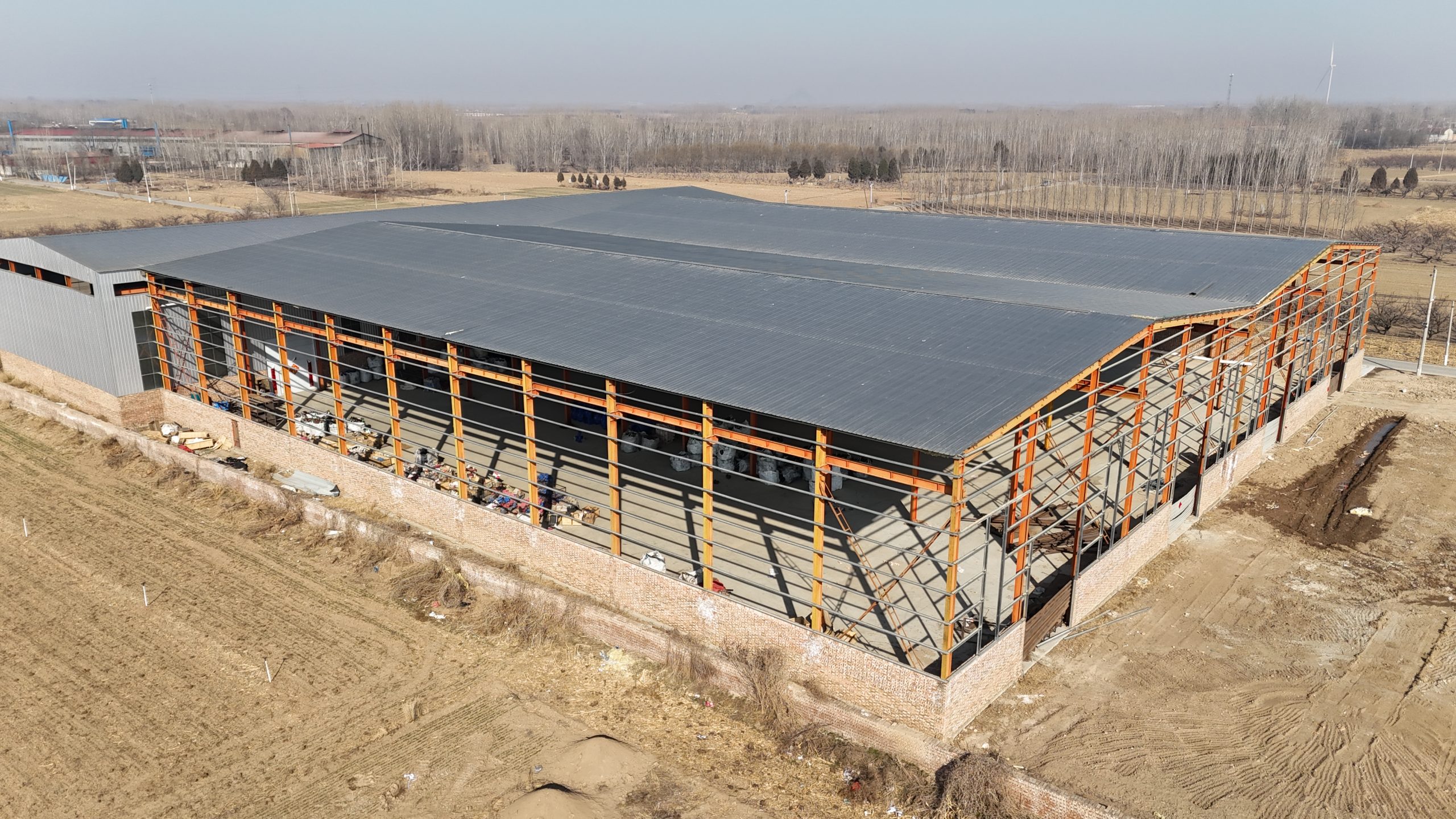
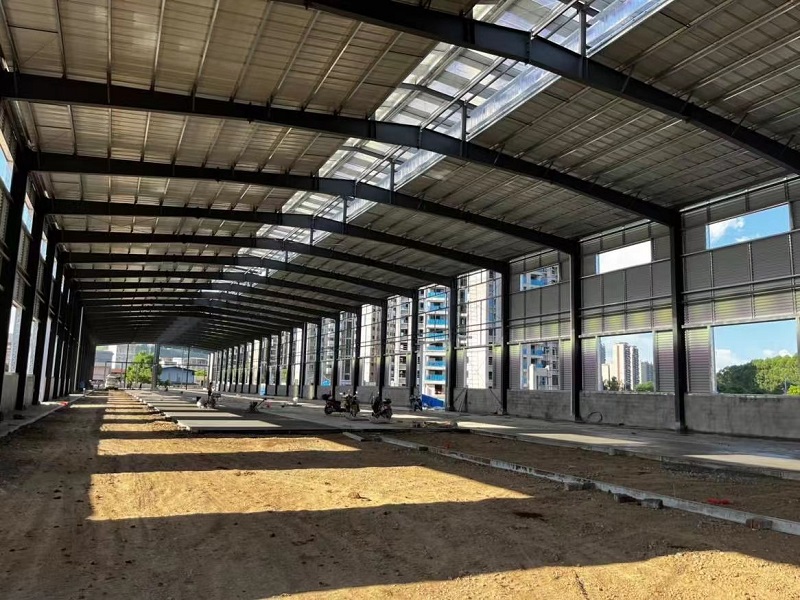
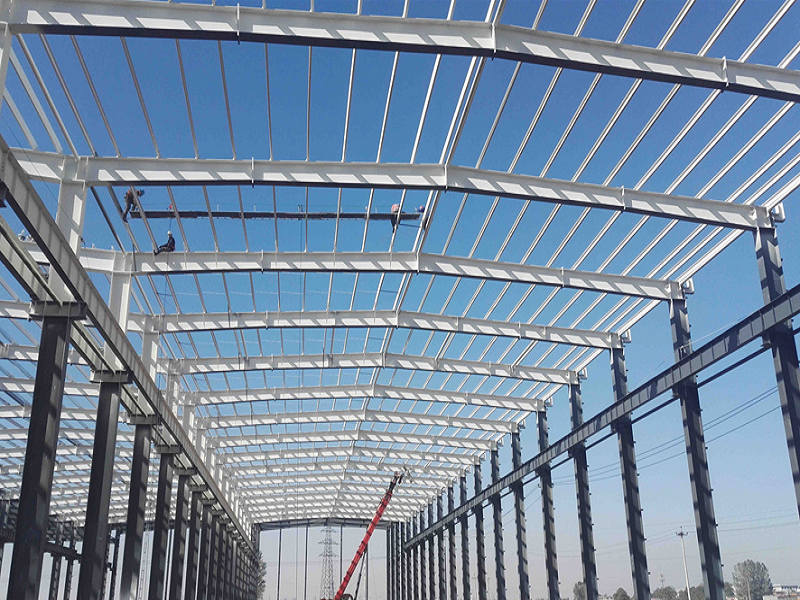
Choosing the roof for a steel warehouse comes down to one question that shapes your budget, your energy bills, and how the building performs for the next 20 years: sandwich panel or single sheet? Both are proven roofing systems for steel structures, but they solve very different problems. This guide explains how each roof is built, how they compare on insulation, cost, fire safety and lifespan, and which is the smarter choice for your climate and the goods you store.
What Is a Single Sheet (Single Skin) Roof?
A single sheet roof — also called a single skin roof — is exactly what it sounds like: one layer of profiled (corrugated) steel sheet fixed directly onto the purlins of your steel frame. Sheet thickness typically ranges from 0.3 mm to 0.8 mm, and the steel is usually galvanized or color-coated (PPGI) to resist corrosion.
Because it is a single metal skin, it provides no built-in thermal or acoustic insulation. Heat passes straight through the steel, and rain hitting the roof is clearly audible inside. Insulation can be added afterwards — for example, a glass wool blanket with a foil facing rolled out beneath the sheet — but that means extra material, extra labor and extra cost.
Single sheet roofing is the go-to for open, non-climate-controlled spaces: storage sheds, agricultural buildings, simple workshops, carports, and warehouses holding goods that are not sensitive to temperature.
What Is a Sandwich Panel Roof?
A sandwich panel — also called an insulated panel or composite panel — is made of three layers bonded together: an outer steel sheet, an insulating core in the middle, and an inner steel sheet. The result is a single, ready-to-install board that delivers structure, weatherproofing and insulation all at once.
Common panel thicknesses are 50 mm, 75 mm, 100 mm and 150 mm — the thicker the core, the better the insulation. Because the insulation is factory-bonded inside the panel, a sandwich panel roof controls indoor temperature, limits condensation and dampens noise from day one, with no separate insulation layer required.
Sandwich panels are the standard choice for climate-controlled and comfort-sensitive buildings: cold storage, food and pharmaceutical warehouses, factories with workers on the floor, and any structure in a hot or cold climate where energy cost matters.
Sandwich Panel vs Single Sheet: Head-to-Head Comparison
The table below sums up how the two roofing systems compare across the factors that matter most for a warehouse.
| Factor | Single Sheet Roof | Sandwich Panel Roof |
|---|---|---|
| Construction | One profiled steel sheet | Steel + insulating core + steel |
| Thermal insulation | None on its own | Built in — excellent |
| Condensation control | Poor — prone to dripping | Strong — minimizes condensation |
| Upfront cost | Lower | Higher |
| Insulation included | No (added separately) | Yes |
| Sound insulation | Poor (noisy in rain) | Good |
| Fire safety | Non-combustible sheet, but conducts heat | Depends on core (rock wool = highest rating) |
| Weight on frame | Lighter | Heavier |
| Typical lifespan | 15–25 years | 20–30+ years |
| Best suited to | Non-climate-controlled storage | Climate-controlled / comfort spaces |
The Factors That Actually Decide It
1. Thermal Insulation and Energy Cost
This is the single biggest difference between the two. A single sheet roof lets heat flow freely — in a hot climate the space under a bare steel roof can become uncomfortably hot, and in a cold climate heat escapes just as fast. If your warehouse is air-conditioned or heated, a single sheet roof forces your HVAC to run constantly and drives up your energy bill. A sandwich panel’s insulating core dramatically slows heat transfer, keeping the interior stable and lowering running costs year after year.
2. Condensation Control
When warm, humid air meets the cold underside of a bare steel sheet, moisture condenses and drips onto whatever is stored below — a real risk for packaged goods, electronics and machinery. Sandwich panels keep the inner surface closer to room temperature, which greatly reduces condensation along with the water damage, rust and mold that come with it.
3. Upfront Cost vs Lifetime Cost
Single sheet roofing wins on day-one price, and that is often why budget-driven projects choose it. But the comparison shifts over the life of the building: if you later add insulation, pay higher energy bills, or deal with condensation damage, the “cheaper” roof can cost more overall. Sandwich panels cost more upfront but bundle insulation into the price and reduce long-term operating costs.
4. Fire Safety
Fire performance depends mostly on the material used. A single steel sheet is non-combustible but conducts heat readily. For sandwich panels, the core is what matters: mineral (rock) wool cores are non-combustible and offer the highest fire rating, while EPS (polystyrene) cores are combustible and less suitable where fire safety is critical. If your stored goods or local building codes demand fire resistance, a rock wool sandwich panel is the safest roof.
5. Sound Insulation
Under heavy rain or hail, a single sheet roof is loud. The core inside a sandwich panel absorbs much of that noise, which matters for workshops with staff on the floor, offices attached to warehouses, or any space where a quiet interior is important.
6. Weight and Structural Design
Single sheets are lighter, which can slightly reduce the steel frame required. Sandwich panels are heavier and must be accounted for in the structural design — something a professional steel structure manufacturer factors in from the very start, so the frame and roof work together safely.
If You Choose a Sandwich Panel: Which Core?
Not all sandwich panels are equal — the core defines both performance and price. The four most common cores are:
- EPS (Expanded Polystyrene): The lowest-cost option, with good insulation and light weight — but it is combustible. Best for dry storage where fire risk is low and budget is tight.
- PU / PIR (Polyurethane / Polyisocyanurate): The best insulation per millimeter of thickness, moisture resistant and ideal for cold storage. Fire performance is moderate.
- Rock (Mineral) Wool: Non-combustible with the top fire rating, plus strong sound insulation. It is heavier and has slightly lower thermal value than PU, but it is the choice wherever fire safety is required.
- Glass Wool: Lightweight, economical, with good insulation and fire resistance — a balanced middle option for many general warehouses.
So Which Should You Choose for Your Warehouse?
There is no universally “better” roof — only the right roof for your use case. Here is a simple way to decide.
Choose a single sheet roof if:
- You store goods that are not sensitive to temperature or humidity
- The building is open and not air-conditioned or heated
- Upfront budget is your top priority
- It is a simple shed, agricultural building or basic workshop
Choose a sandwich panel roof if:
- The warehouse is climate-controlled, or worker comfort matters
- You store temperature- or moisture-sensitive goods (food, pharma, electronics)
- You are in a very hot or very cold climate and want to cut energy costs
- Fire safety, condensation control or noise reduction are priorities
Don’t forget your climate
Climate should weigh heavily in your decision. In hot, sunny regions, an uninsulated single sheet roof can turn a warehouse into an oven and push cooling costs sky-high — insulation quickly pays for itself. In cold regions, a sandwich panel keeps heat in and helps prevent condensation and ice. In mild, dry climates with temperature-tolerant goods, a single sheet roof may be all you need. Matching the roof to local conditions is the difference between a building that works and one you constantly fight against.
Get the Right Roof for Your Steel Warehouse
The best roof is the one designed around your climate, your budget and what you store. As a steel structure manufacturer, we design and build complete steel warehouses with both single sheet and sandwich panel roofing — and we can recommend the right system, panel thickness and core to match your project. Whether you are weighing options or ready to build, contact our team for a free consultation and a quote tailored to your warehouse.