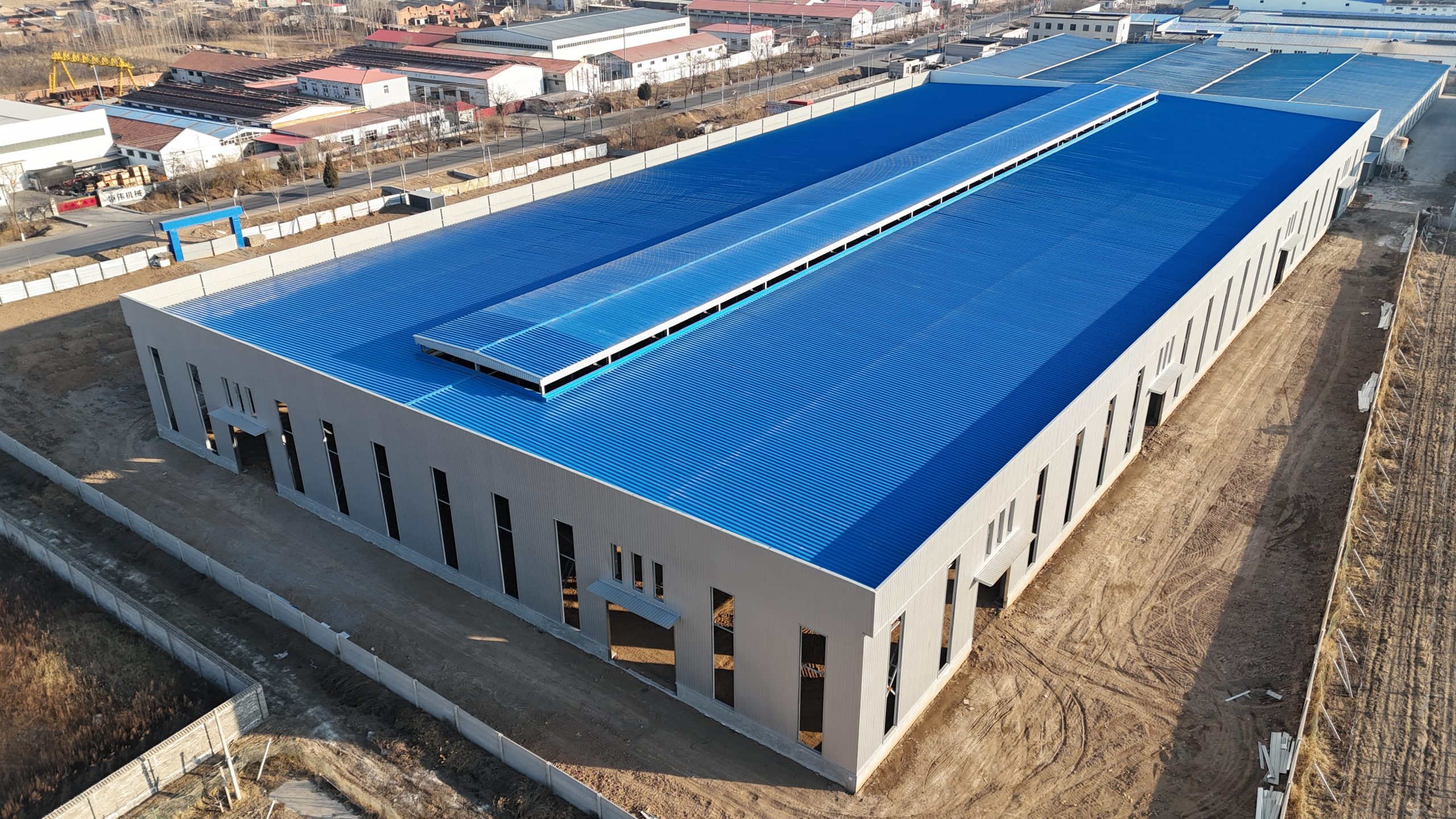
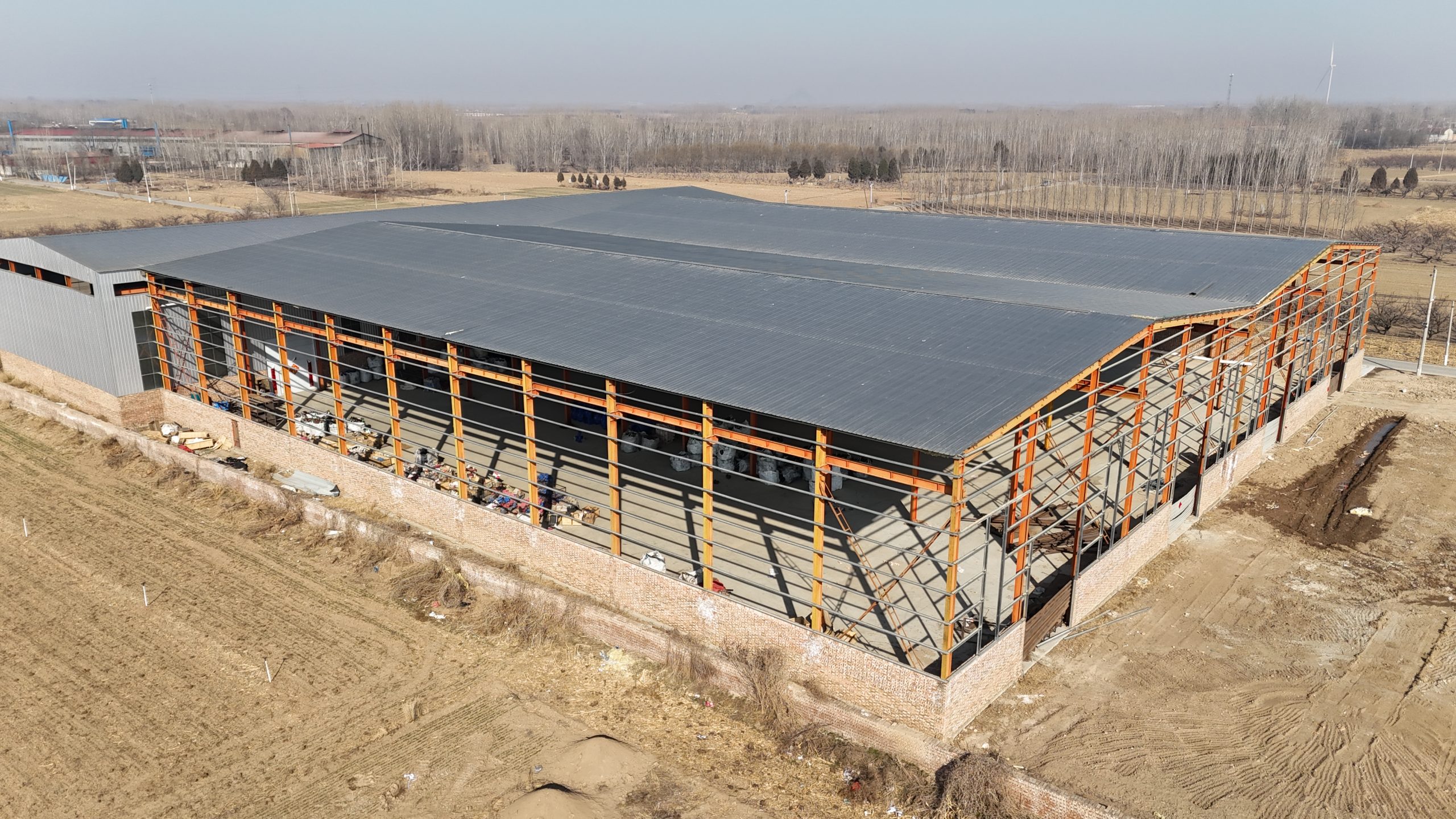
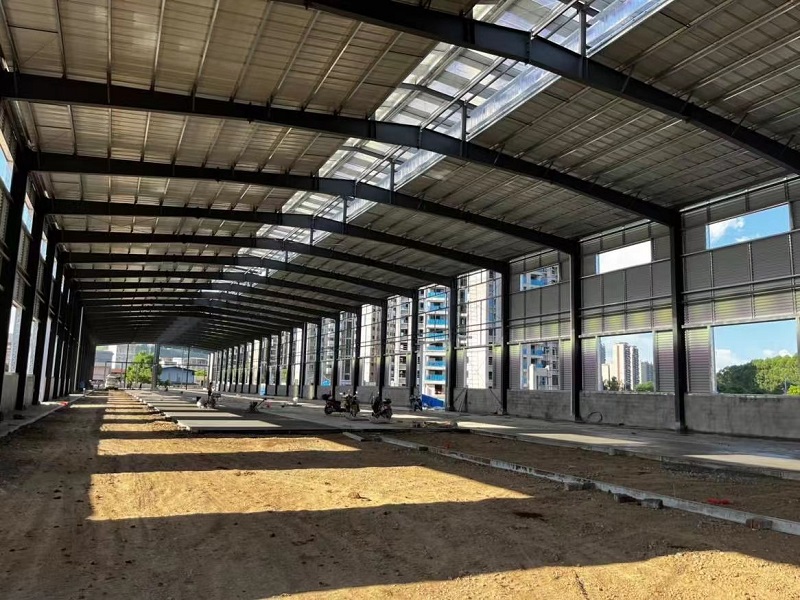
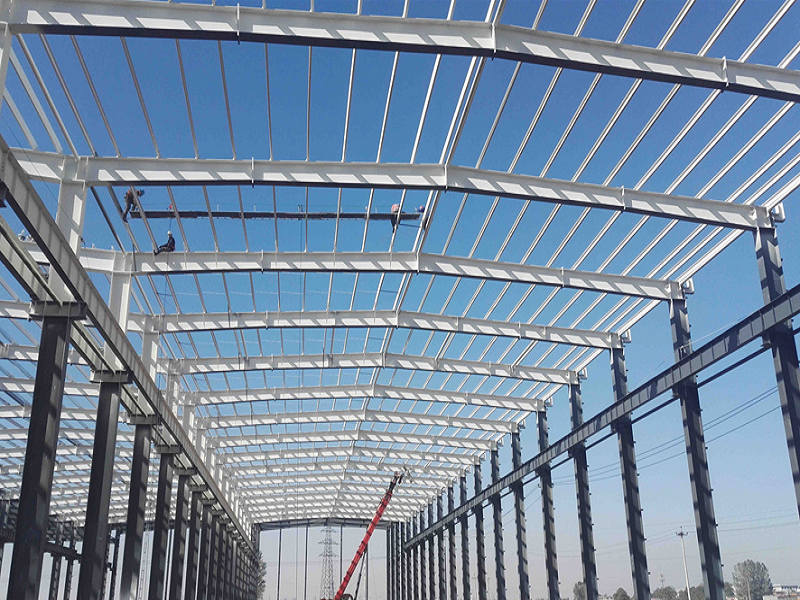
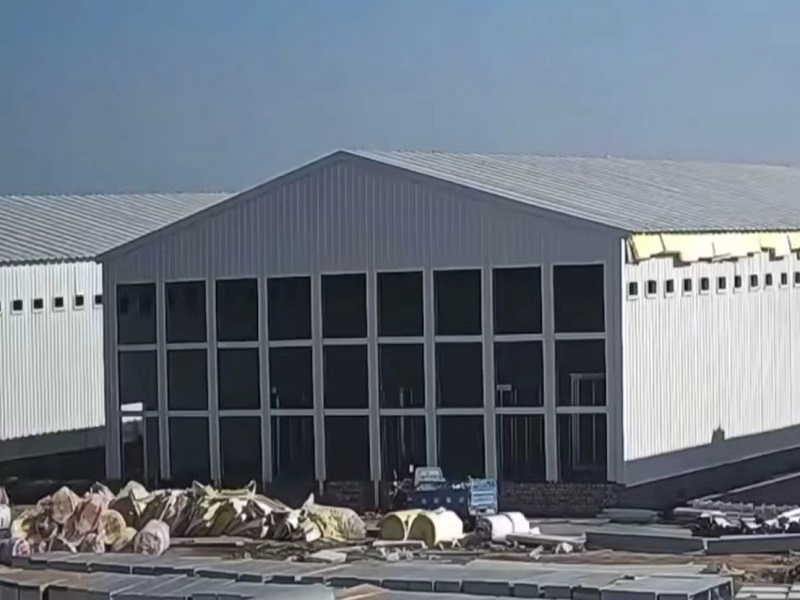
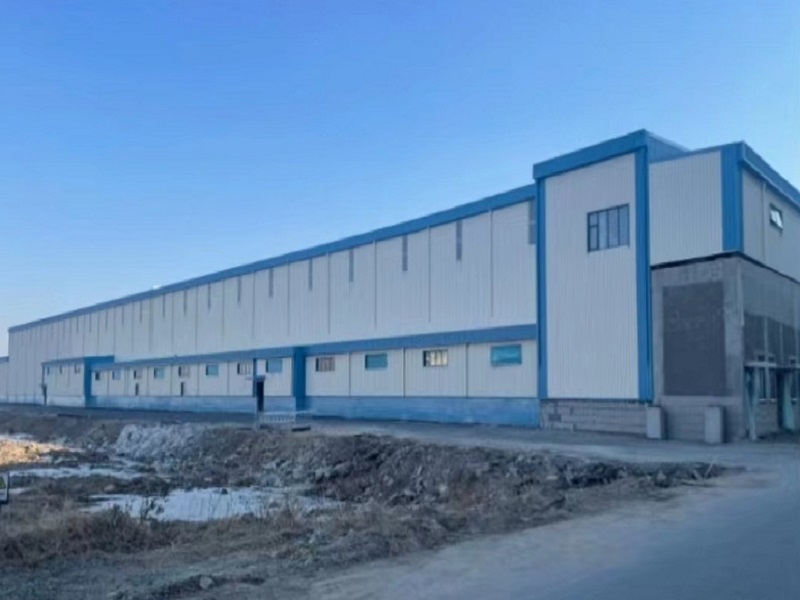
The honest answer to poultry house cost is that the steel building is only part of it — often less than half. What turns a steel shell into a working chicken house is everything inside it: ventilation, cooling, heating, feeding, drinking and climate controls. Quote the structure alone and the number looks low; add the equipment that actually keeps birds alive and productive, and you get the real figure. This guide breaks a steel poultry house cost into its true layers so you can budget properly. To see typical buildings, browse our steel poultry house range, and for the wider costing method our 2026 steel building price guide is a useful companion.
As a Chinese steel structure factory, we supply the fabricated poultry-house frame factory-direct and ship it worldwide; buyers add the foundation, erection and equipment locally or through our supply partners. If you are also planning cattle or other livestock buildings, our steel livestock shed range follows the same model. Let’s look at what a chicken house really costs.
Quick answer: poultry house cost by layer
A steel poultry house is best priced in layers, because the building type — open-sided or environmentally controlled — changes every one of them. Figures below are indicative 2026 ranges per square meter and depend on your final design, bird type, equipment brand and destination.
| Cost layer | Open-sided house | Environmentally-controlled house |
|---|---|---|
| Steel frame only — FOB China | $32–$55/m² | $40–$70/m² |
| + Roof & walls | +$18–$30/m² (single-skin) | +$40–$70/m² (insulated panel) |
| + Environmental & production equipment | +$10–$25/m² (fans, feeders, drinkers) | +$45–$110/m² (tunnel vent, cooling, heating, feeding, drinking, controls) |
| Fully built (incl. foundation & erection) | ~$120–$260/m² | ~$260–$500/m² |
Planning a poultry project? Send us your house dimensions, bird type and flock size and we’ll prepare a detailed FOB quote for the structure, usually within 24 hours. Contact us for a free quote or message us on WhatsApp.
Why the steel structure is only part of the cost
This is the point most price comparisons miss. In a modern environmentally-controlled chicken house, the equipment can cost as much as, or more than, the steel building itself. A functioning house needs a full system, not just walls and a roof:
- Ventilation — exhaust fans and, in tunnel houses, high-capacity fans to move air the length of the building.
- Cooling — evaporative cooling pads or foggers to control heat, essential in warm climates.
- Heating — brooders or radiant/space heaters, especially for chicks and cold seasons.
- Feeding — automatic pan or chain feeders with silos and augers.
- Drinking — nipple drinker lines with pressure regulation.
- Lighting and controls — dimmable lighting and a climate controller that runs fans, cooling and heating automatically.
Because of this, a bare-frame quote and a complete-house quote are worlds apart. When you compare a poultry house cost from two suppliers, the first question is always the same: does the price include equipment, or just the building? The steel structure is typically only 30–50% of a fully equipped, environmentally-controlled house.
Open-sided vs. environmentally-controlled: two different budgets
The single biggest decision for your budget is house type. It sets your structure spec, your equipment list and your cost per bird.
| Factor | Open-sided (natural ventilation) | Environmentally-controlled (closed / tunnel) |
|---|---|---|
| Build cost | Lower | Higher |
| Best climate | Mild / tropical | Any, including hot and cold extremes |
| Stocking density | Lower (fewer birds/m²) | Higher (more birds/m²) |
| Performance | Weather-dependent | Consistent, better feed conversion |
| Equipment | Minimal | Full (fans, cooling pads, heaters, controllers) |
| Best for | Smaller flocks, warm regions, tight budgets | Commercial scale, year-round production |
For hot, stable climates an open-sided house can be a smart, economical choice. For commercial-scale broiler or layer operations that need consistent results year-round, an environmentally-controlled house costs more up front but usually pays back through higher density and better flock performance.
Broiler house vs. layer house cost
Bird type changes the equipment bill significantly, even when the steel shell is similar. A broiler house is essentially a floor-raised system: the main costs are the building, ventilation, and floor feeding and drinking lines. A layer house adds the egg-production system on top — whether battery cages, an enriched colony system or a cage-free aviary — plus egg collection, and that system is frequently one of the largest single line items, sometimes rivalling the structure. So while the steel frame for a broiler and a layer house of the same size can be close, the finished layer-house cost is typically higher once the cage or aviary system and egg handling are included. Decide bird type and system early, because they drive both your equipment budget and the internal layout the structure has to support.
Poultry house cost by size
Larger houses usually cost slightly less per square meter, but the equipment scales with capacity, so the saving is modest. The examples below assume environmentally-controlled broiler houses; treat them as planning brackets, not fixed prices.
| House size | Floor area | Approx. broiler capacity | Steel + insulated envelope (FOB) | Fully built incl. equipment (est.) |
|---|---|---|---|---|
| Small | ~500 m² | ~7,500–9,000 birds | $35k–$68k | $130k–$250k |
| Medium | ~1,200 m² | ~18,000–21,000 birds | $84k–$162k | $310k–$600k |
| Large | ~2,000 m² | ~30,000–36,000 birds | $140k–$270k | $520k–$1.0M |
A useful way to sanity-check any quote is cost per bird: divide the all-in price by the flock capacity. It lets you compare an open-sided house against a controlled one, or one supplier against another, on the same basis — and it is the number your return on investment ultimately depends on.
What drives the steel structure cost
The building itself is the most predictable layer, and the part we supply factory-direct. Poultry houses are usually single-story, wide-span and long, with no crane, so the frame is lighter than a workshop — but a few things still move the price. Span width matters: a wider house without internal posts uses more steel but gives cleaner airflow and easier management. Length is efficient: long houses spread the end-frame cost over more floor area, lowering the per-square-meter rate. Insulation is the big one: a controlled house needs insulated sandwich-panel walls and roof to hold temperature, which costs more than the single-skin sheeting used on an open-sided house but is essential for bird comfort and performance. And local loads — wind, snow and seismic — set the section sizes, so the same house is engineered differently for a coastal, highland or snowy site.
How to reduce poultry house cost without hurting the flock
A lower poultry house cost should never come from cutting the things that protect your birds. The savings that actually work are structural and strategic:
- Match the house type to your climate. In a mild or tropical region, an open-sided house avoids most of the equipment bill while still performing well — paying for full tunnel ventilation you don’t need is the most common overspend.
- Build long and standard-width. Long houses at an efficient span spread fixed costs over more floor area, lowering the per-square-meter rate without touching bird welfare.
- Source the structure factory-direct. The steel frame is the largest predictable cost; buying it from a China factory is where the biggest clean saving sits.
- Right-size stocking density. Design to a sensible density for your bird and climate rather than the theoretical maximum, which protects performance and keeps mortality down.
Cutting insulation, ventilation or drinker quality to shave a quote almost always costs more later in lost birds and poor feed conversion — a false economy that raises your real poultry house cost per bird produced.
Kit vs. installed: what a poultry-house quote covers
As with any steel building, confusion about poultry house cost comes from comparing different scopes:
- Structure only (FOB China): the fabricated steel frame and cladding, loaded into containers at our port. This is what we quote for the building and the figure you compare between factories.
- Structure + equipment: the building plus the ventilation, cooling, heating, feeding and drinking systems — often supplied and priced separately.
- Fully built / turnkey: everything above plus foundation, slab and erection, most of which is your local market.
Always confirm whether a price is the bare building, the building plus equipment, or a complete installed house — and whether it is FOB or CIF. A serious quotation lists the design basis, steel tonnage, cladding and insulation spec, the equipment package if included, packing, lead time and payment terms, not just a single per-square-meter figure.
Why source your poultry-house structure from China
For most overseas farmers and integrators, buying the structure factory-direct from China lowers the largest predictable cost of the project. A high-volume steel fabrication industry produces engineered poultry-house frames at a competitive price per ton, and the flat-packed structure ships economically in containers. Buyers combine our low structure cost with locally sourced or partner-supplied equipment and their own foundation and erection, and land a complete house well below a fully local build. Plan for freight, lead time and customs; for most poultry projects those are outweighed by the structure saving, and the equipment can often ship alongside the building.
Regional notes: where your house will be built
Because foundation, erection and often equipment are sourced locally, the same structure lands at a different all-in price by region. Across much of Latin America, Africa and Southeast Asia — where a lot of poultry expansion is happening — lower erection labor brings the fully built figure toward the lower end of the ranges here, while import duty, inland transport and, in seismic regions like the Andes, stronger structural design need budgeting. In higher-labor markets the installed figure trends upward, though buyers still gain from the lower structure cost and faster build. Many farmers ask us to quote the structure in US dollars and design the frame to local wind and seismic loads, then handle the foundation and equipment installation locally. Whichever market you’re in, the steel building is the controllable, portable saving; the equipment and local works are what vary.
How to get an accurate poultry house quote
To turn these estimates into a firm price, have these details ready: house dimensions (width × length × eave height); bird type and system (broiler, or layer with cage/aviary); target flock size or stocking density; house type (open-sided or environmentally-controlled); your climate and location, so the frame is designed to the right loads and the ventilation to the right conditions; and whether you need the equipment package or the structure only. With those, a proper quote is quick and far more reliable than any per-square-meter or per-bird rule of thumb.
Frequently asked questions
How much does a poultry house cost in 2026?
It depends heavily on house type. As a fabricated steel structure FOB China, expect roughly $32–$70/m² for the frame, plus cladding. A complete open-sided house runs about $120–$260/m² fully built, while an environmentally-controlled house with full equipment is commonly $260–$500/m², depending on spec, equipment and your country.
Why is the equipment so expensive?
Because a modern chicken house is a climate-controlled system. Fans, evaporative cooling, heating, automatic feeding and drinking lines, and the controller that runs them can cost as much as the steel building itself. That is the difference between a bare-frame quote and what the house really costs.
Is an open-sided or a controlled house cheaper?
An open-sided, naturally-ventilated house is cheaper to build and works well in mild or tropical climates. A controlled house costs more but allows higher stocking density and consistent performance year-round, which usually improves return on investment at commercial scale.
Does the structure price include equipment and the foundation?
Usually not. An FOB structure price covers the fabricated steel frame and cladding. The environmental and production equipment is often a separate package, and the concrete foundation and slab are poured locally. Always confirm exactly what a quote includes.
How do I compare quotes fairly?
Put everything on a cost-per-bird basis and confirm the scope of each quote (structure only, structure plus equipment, or fully installed). Two prices are only comparable when they cover the same building type, equipment and delivery terms.
Can you ship a poultry house to my country?
Yes. Steel poultry-house structures flat-pack into shipping containers and export worldwide, and equipment can often ship alongside. We regularly ship to Latin America, Africa and Southeast Asia. Freight and duties depend on your destination and are quoted per project.
How many birds will my house hold?
It depends on bird type and stocking density. As a rough guide, a controlled broiler house holds around 15–18 birds per square meter, so a 1,200 m² house is in the region of 18,000–21,000 birds. Layer capacity depends on the cage or aviary system chosen.
The bottom line
The real poultry house cost is the sum of two things people too often price separately: the steel building, and the equipment that makes it a working house. The structure is the predictable, controllable part — and the part you can buy factory-direct from China to save the most. The equipment and local works vary by bird type, house type and country. Decide your house type, bird system and flock size first, then get a scoped quote that lists both the building and the equipment, and you will know what your chicken house really costs before you commit.